Express checkout is built to skip steps, and the step it skips is the one where buyers look at their address. When someone pays with Shop Pay, Apple Pay, Google Pay, or PayPal, the shipping address comes from the wallet’s saved profile and the address form never appears. The order is placed with whatever the wallet had on file, and the buyer never sees a form, an autocomplete suggestion, or a prompt to look twice.
Why wallet addresses go wrong
Wallet addresses aren’t typed in a hurry; they’re typed once, years ago, and never looked at again. The classic failures:
- The buyer moved and never updated the wallet. The order ships to the old apartment.
- The saved address has no unit number, because the wallet’s form didn’t insist on one.
- The phone autofilled a work address, a parent’s house, or a years-old default, and the buyer confirmed the payment sheet without reading the fine print.
The buyer doesn’t notice because the whole point of a wallet is not having to look. You find out three weeks later, on the carrier invoice.
What still works at checkout: your Block rules
Your Block at checkout rules run server-side, inside checkout itself, so they apply on every payment method — wallets included. A PO Box saved in Apple Pay still trips an active PO Box block, and the order can’t be completed with that address, the same as a typed one.
The buyer experience is rougher, though, and it’s worth being honest about. Your block message is rendered by Shopify’s native checkout, and a wallet skips that screen — so the buyer doesn’t get the tidy message-and-fix flow a typed checkout shows. The order simply won’t go through (Google Pay can even block without surfacing a reason), and there’s no form on screen to correct. The hard block holds, but the conversation about a bad address — and any probable-typo fix — has to happen right after the order is placed.
How Address Verifier catches the rest
We verify the address on the thank-you page, seconds after payment. That surface renders for every order on every payment method, wallets included, which is exactly why it’s our primary one. A wallet order with a stale or incomplete address gets the same card as any other:
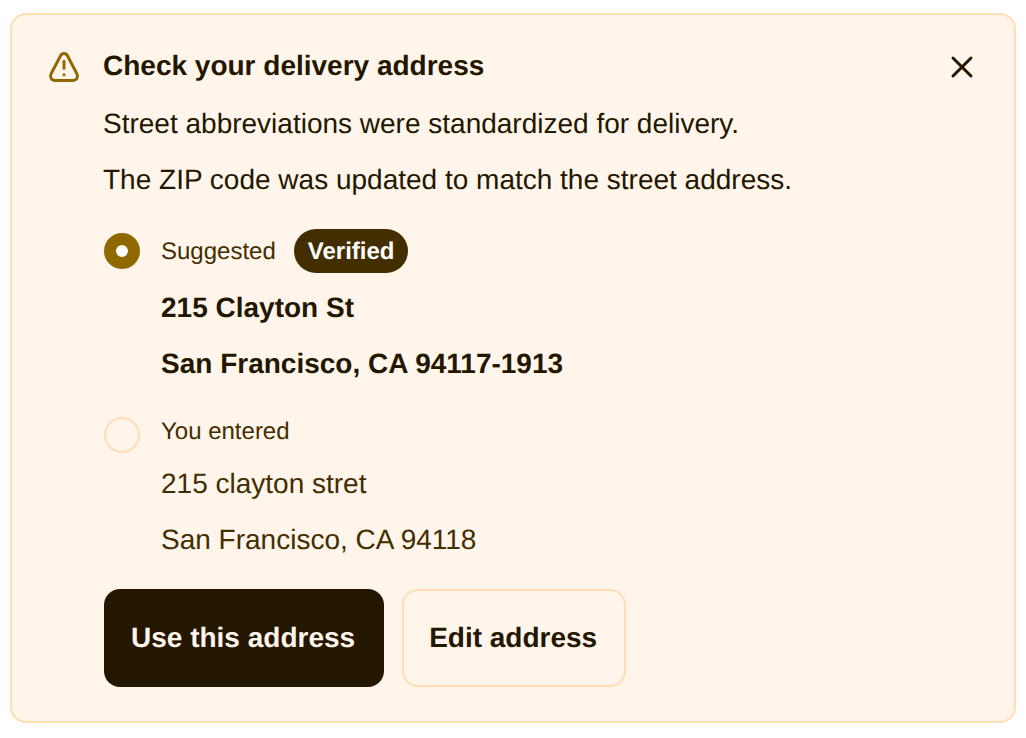
One tap applies the verified fix to the order, before anything ships. If the buyer closes the page, the prompt waits on the order status page they reach from their confirmation email. What your buyer sees walks through every state.
And because a wallet order can get checked on both pages, it’s worth saying plainly: that’s still one $0.04 charge, not two. Charges are counted per order, not per check.
On Shopify Plus, Shop Pay can show the prompt before payment
Shop Pay is the one accelerated checkout that can render the prompt inside it. Plus stores with in-checkout correction turned on can include the Address Verification block in Shop Pay: select the block in the checkout editor and switch on Include block in Shop Pay. The verified fix then appears right above the Pay now button, while the stale saved address is still on screen, which is the best moment a Shop Pay order ever offers.
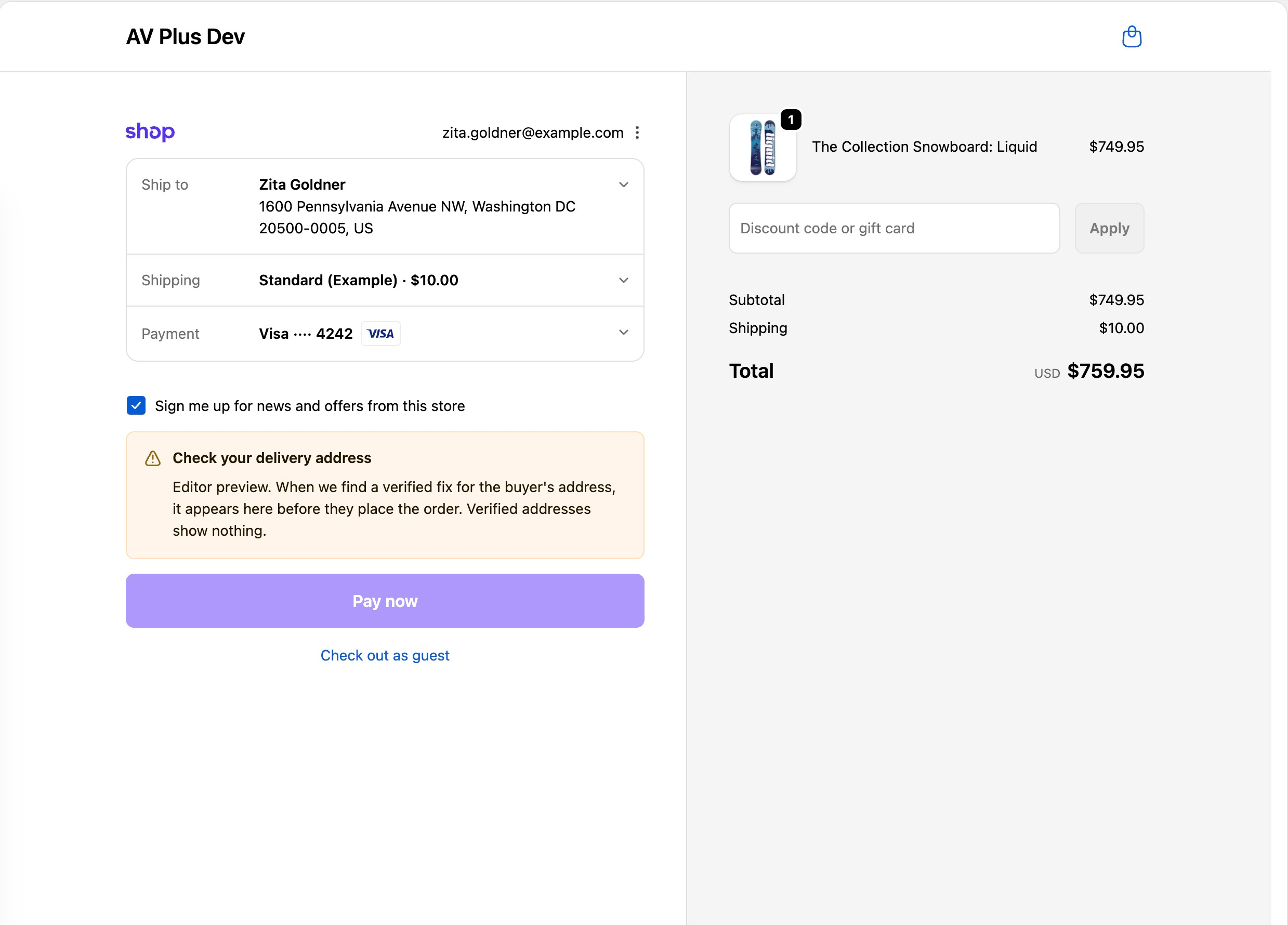
Apple Pay and Google Pay stay closed to apps, so for those two the post-purchase prompt remains the only conversation you get.
The practical takeaway
For most stores, express checkout is where the largest share of correctable addresses comes from, precisely because nobody re-reads a saved address. Keep your hard policy rules on Block so wallets can’t slip a PO Box through, and let the post-purchase prompt handle the typos and missing units that no checkout, native or otherwise, gets a chance to ask about.